Disclaimer: the staff writers here are not vets nor are they qualified to give medical advice. This article’s purpose is strictly to share stories/information and should not be used for diagnostic purposes. Please take your cat to the vet if you suspect anything might be wrong with them. Your vet will know best what to do in your specific situation.
Last month, we talked about FLUTD/FIC, which are diseases that afflict cats’ urinary tracts. This month, we are continuing to look at urinary tract issues, this time focusing on a well-known, common problem: urinary tract infections (UTIs).
UTIs can affect both male and female cats, unlike FLUTD/FIC, which is much more common in male cats. UTIs more commonly affect older cats, cats with diabetes, and cats with FLUTD/FIC, with UTIs being most common in older female cats. The cause of most UTIs is relatively straightforward. Just like in humans, feline UTIs are caused by a bacterial infection of the urethra. If left untreated, the infection can spread into the bladder and kidneys, which can be very dangerous. Fortunately, UTIs can usually be treated with antibiotics, and with prompt, early treatment, most cats make full recoveries.
UTI warning signs include:
– Struggling to urinate. The cat passes small amounts of urine or none at all.
– Frequent trips to the litter box.
– Urinating outside the litter box.
– Discomfort while urinating. The cat might hiss or yowl in the litter box.
– Licking at the genitals.
– Restlessness, listlessness, maybe a fever.
– Blood in the urine.
If you observe any or some of these signs in your cat, take them to the vet right away and have them checked out. The earlier you catch any infections, the better, and the sooner you can get them started on antibiotic treatment. During and after treatment, however, it is important that you monitor them for additional signs of distress — sometimes the inflammation caused by the UTI can lead to the development of a urinary blockage, especially in male cats, so it’s important to stay vigilant and make sure your cat is not developing additional complications.
With quick treatment and the eye of a watchful, loving pet-parent, most cats can recover from their UTIs and go back to being their playful, happy selves in a short time. When in doubt, it’s always a good idea to ask a vet to make sure your fur-baby is okay.
Recently, I have had the misfortune of being persecuted, my dear followers, by what I can only assume are gremlins in my litter box. I have no idea why these invisible creatures have chosen to come after me, especially now. At troubled points in my past, I dealt with their curmudgeonly attacks, and I dealt with these attacks largely in silence. These attacks, although irritating, would eventually pass, and I would forget about them until they would inevitably return one day without warning. Sometimes weeks would pass where I would be left undisturbed, and I would relish those weeks, relish the freedom of being able to use the litter box in peace. Other times, I would have to grit my teeth, knowing that the gremlins would emerge and make my litter box an unpleasant place whenever I attempted to do anything. I was brave for a long time, enduring the gremlins, but eventually it became too much for me. I had to seek out alternative options just to try to escape them. I tried to use other places–the bed, the couch, the rug, hidden corners around the house. The gremlins still managed to find me. Now I wasn’t safe anywhere in the house, and I started hissing at them. They were lurking invisibly around me, everywhere. I just wanted to win back the trust and peace I had formerly enjoyed in my litter box.
I had tried to tell various humans about this at points when it got especially bad. My humans didn’t seem to understand my distress. They thought I was just being a bad-tempered emperor, upset by the rearrangement of furniture in my palace. Some vets didn’t understand me either, saying it was just because I was fussy about my litter. It’s the gremlins, I kept saying, it’s the gremlins, but my cries fell on deaf ears for a long time. It was really the hissing and the madness that got my humans’ attention–finally, at last, someone was aware of my struggle with these gremlins.
I almost regretted bringing their awareness to it at first. I can’t count the number of times I got stuffed in the dreaded cat carrier and hauled to a vet. The number of times I saw the cold insides of that vet’s office! The number of times I got poked and prodded! The number of times I was forced to eat horrible, bitter liquids! But whatever they did to me, as awful as it was, chased the gremlins away, at least for now. It’s hard to believe that they’re actually gone and won’t torment me anymore.
Disclaimer: the staff writers here are not vets nor are they qualified to give medical advice. This article’s purpose is strictly to share one individual’s story and should not be used for diagnostic purposes. Please take your cat to the vet if you suspect anything might be wrong with them. Your vet will know best what to do in your specific situation.
This post today will discuss our long and at-times frightening journey in discovering, diagnosing, and treating Julius’ FLUTD/FIC. For those who might not be extremely familiar with FLUTD, it stands for feline lower urinary tract disease. FLUTD is a general term that encompasses a number of related medical conditions, all of which involving issues with urination, the bladder, and the urethra (especially in male cats). Cats with FLUTD often struggle to use the litter box and may experience a lot of pain when attempting to urinate. This pain can often prompt them to urinate outside of their litter box, if they are even able to urinate at all. FLUTD can be caused by a number of conditions, such as the presence of urinary stones or blockages. It can also be caused, as in Julius’ case, by a condition called feline idiopathic cystitis (FIC), which basically means that the affected cat’s bladder becomes inflamed for some unknown reason and then causes pain and other problems with urination. These conditions can be life-threatening if they lead to a severe infection or a urinary blockage, which can kill a cat very quickly if left untreated.
Julius came to me with a tentative diagnosis of FLUTD/FIC, but at this early stage of our lives together, this diagnosis was not one that was set in stone. Various vets disagreed over whether he actually had the condition or not. Before I got him, a woman had adopted him and then returned him to the shelter because he had been peeing consistently outside of his box. A vet had diagnosed him with “probable FLUTD” but hadn’t done any tests such as urine analysis to check for crystals or infection in Julius’ urine. This tentative diagnosis, which was displayed prominently on a card above his cage, warned potential pet parents that he would need to be on a special kind of food that can be quite pricey.I think this is what scared people off from adopting Julius for so long. He was (and still is) an extremely cuddly, friendly cat, but he had been in the shelter for nearly a year by the time I met him. I adopted him anyway, knowing that he might have health problems and might require a special diet. I have a special diet myself (hello food allergies) so I sympathized a lot with his situation. I was concerned about his medical history, of course, but two other feline medical professionals told me they did not believe Julius had FLUTD. They both believed he had been incorrectly diagnosed and that his peeing problems were behavioral — the result of his previous owner having left him for periods of 3 weeks at a time and not regularly changing his litter box. Since the vets didn’t believe the FLUTD diagnosis, I fed Julius “regular” indoor cat food instead of his special diet. Things were fine for a while. He ate the regular food and didn’t seem have FLUTD. But then…
About a year and a half later, we began having issues. Minor ones at first. Julius started peeing outside of his box, not all the time, but enough that Nature’s Miracle became a regular staple on my shopping list. He seemed to be peeing strategically, in front of doors and, unfortunately, on the bed. I thought these issues were behavioral as well. He would do it when I was gone for a weekend or on short trips. He would do it if something upset him. He began to get really bad after I rearranged the furniture. I thought he was just acting up, being bad, being naughty. I was frustrated and didn’t understand why he kept peeing everywhere, even when he had a clean litter box. I took him to another vet, who also agreed that it was behavioral. She told me to get Feliway and keep his litter box immaculate. It made no difference. He kept peeing in his favorite “pee spots”, often going on week-long rampages where he would pee everywhere. I was at my wit’s end.
It took six months of this before I finally understood that something was seriously wrong and it was not just “behavioral”. One morning I found Julius in obvious extreme distress. He was straining to urinate but only passing very small amounts. I watched him attempt to use the litter box six to eight times in the span of 30 minutes. He was clearly in a lot of pain and distress. I took him to an emergency animal clinic immediately, afraid that he had become blocked or something similarly serious. The vet there ran a urine analysis and said that she found an infection but no signs of urine crystals, so she sent him home with a ton of antibiotics and pain medications. They were all goopy, stinky, disgusting liquid medicines that I had to shove down his throat twice a day, each time with him struggling and acting like I was trying to murder him. He spent most of his time sleeping, refusing to leave the comfort of his cat bed. This vet said she wasn’t completely convinced that he had FLUTD/FIC. She rechecked his urine and said she found nothing abnormal in it. She suggested that I put him on an OTC special diet to see if it helped. I began feeding Julius a store-bought cat food with a “urinary tract health formula” in the hopes that he would be fine from there on out and not need to be on an Rx diet. Turns out I was very wrong.
Just a month after his first ordeal, Julius became severely distressed again. I found him straining to urinate. This time he was growling and hissing viciously, and he couldn’t pass any urine at all. I rushed him to the emergency clinic again. He saw another vet this time, and this vet ran even more tests than the other vet had — x-rays, urine analysis, etc. This new vet told me that Julius’ urine was completely full of crystals and that he had a blockage in his urethra. Julius had to be put under for a procedure to clean it out and remove the blockage. Those few hours where I was at home alone without my furbaby, waiting for the vet to call me back with news, were some of the worst hours of my life. I could not imagine living without him, and it was terrifying to me just how easy it could have been to lose him. To repeat — blockages are extremely dangerous for cats. If you think your cat could be blocked, take them to a vet immediately. They can die within days if it is not treated.
Luckily, Julius was able to come home the next day. He was woozy, wobbly, and had even more medicine to take. This time, this new vet, I think vet #5 at this point, told me that definitively, yes, Julius has FLUTD and FIC, and that it would be important to put him on a special diet to prevent him from having more issues in the future. The vet did not believe that Julius’ old “special” food was special enough to fix the problem. The vet instead put Julius on Purina Pro Plan Veterinary UR Urinary St/Ox Cat Food, with strict orders that Julius be fed nothing else at all — no treats, no human food, no other brands of cat food. Julius had to take antibiotics for the next 2 weeks and steroids for the next month. This time they were pills, which he happily ate with his food. I watched him like a hawk every time he used his litter box. Gradually, over that month, his urination problems went away. He became bright and happy and playful again, just like he was when I first adopted him.
Julius has been exclusively eating this new food for several months now, and to date he has had no more urinary issues. He no longer pees outside of his litter box and hasn’t had to go back to the vet for any health concerns. He is playful and as light on his feet as a kitten. I think putting him on the expensive, high-grade special diet food has done wonders for his health. It definitely costs more than feeding him something I can just go pick up at Walmart, but the difference it has made in his health and happiness has been worth it.
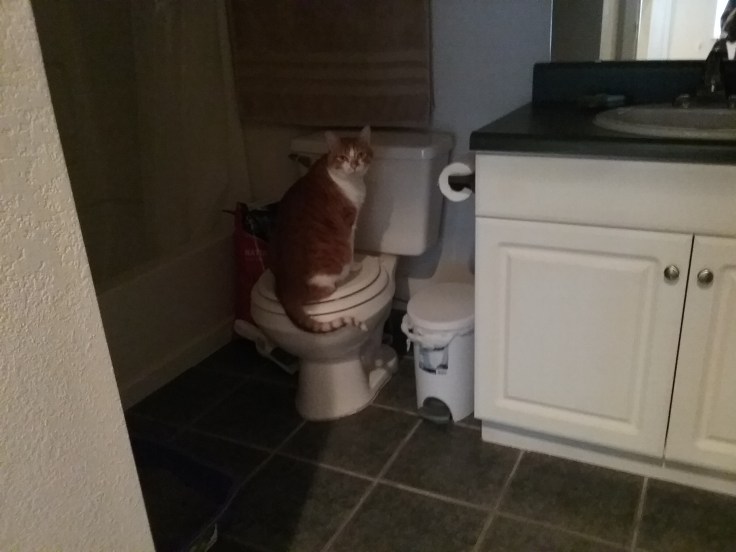

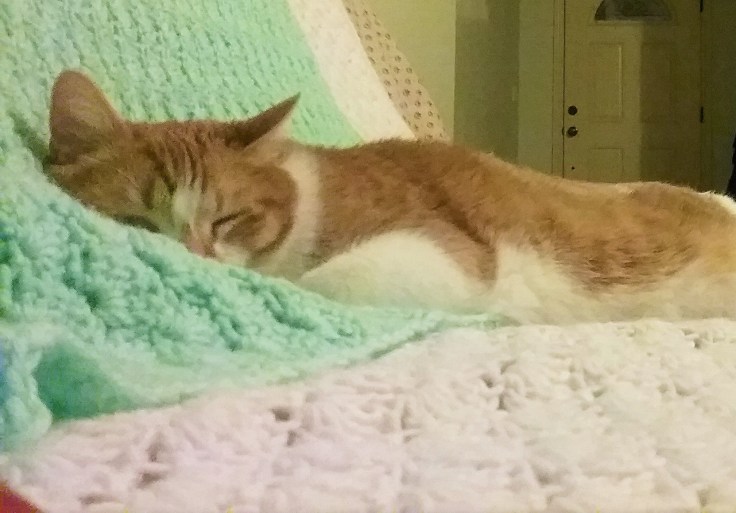
 Sir Socks Le Chat